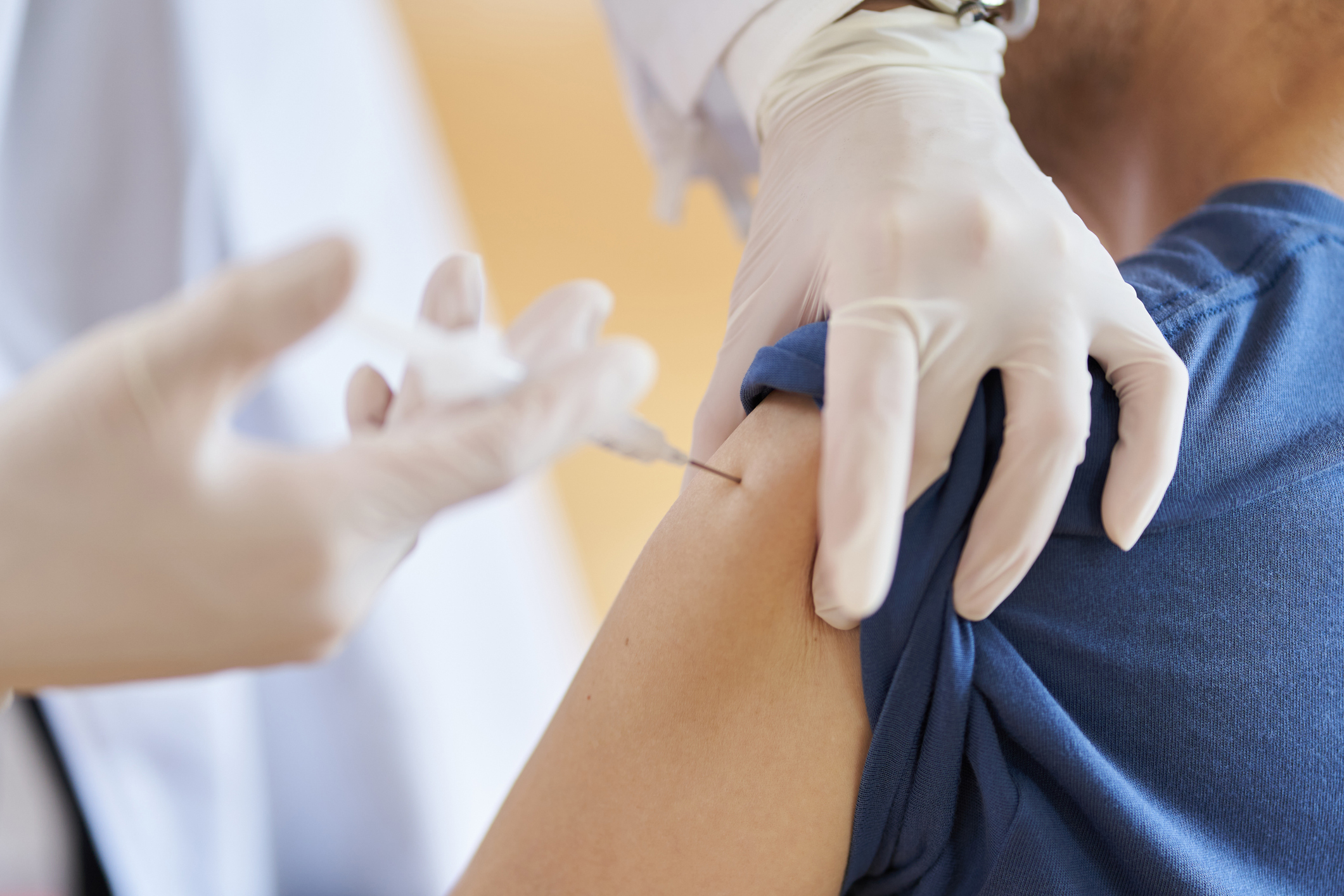
Local health officials are once again urging the public to stay up to date with their COVID-19 vaccinations and to get this year's flu shot.
COVID-19 cases are soaring in the Bay Area and influenza is at "very high" levels, according to recent data. Increasing COVID activity is being seen in reported cases, wastewater surveillance and hospitalization levels, Louise Rogers, San Mateo County health chief, said in a written statement.
With a "tridemic" of COVID-19, respiratory syncytial virus (RSV) and influenza at high levels, residents are encouraged to get vaccinated as soon as possible. Vaccines are available against omicron COVID-19 variants and the currently circulating influenza strains. There is no vaccine against RSV.
"This year's flu shot appears to be a good match for the influenza strains circulating and is available to everyone 6 months and older. The updated bivalent COVID booster, which has been available since September, includes a component of the original virus strain to provide broad protection against COVID-19 and a component for the omicron variant that would be particularly protective during these next winter months," she said.
Yet, as of Nov. 30, 25% of all San Mateo County residents have received the updated COVID-19 bivalent booster. For those ages 50 and older, this percentage increases to 35%, according to Rogers.
"We now recommend both vaccines as soon as possible," she said. "Getting the vaccines to protect against COVID and influenza and taking extra precautions can make a difference. It is especially important for older adults, people with disabilities, and those with underlying medical conditions who remain at higher risk."
Pharmacies and health care providers can provide the shots with appointment availability ranging from a few days to a couple of weeks, she said. County Health is also offering vaccination clinics at rotating locations to reach the communities that have been hardest hit by COVID.
The county is also prioritizing clinics in historically underserved communities, which are disproportionately impacted by COVID, such as Black, Latinx and Native Hawaiian or Pacific Islander residents.
"Racial and ethnic disparities have decreased over the course of the pandemic, but they persist," Rogers said.
"This month we have six scheduled clinics in partnership with schools and faith-based organizations in Redwood City, Menlo Park, and East Palo Alto, particularly in communities where pharmacies are not easily accessible. These are listed on our vaccine clinic calendar website and updated regularly.
"We encourage community partners to continue requesting targeted pop-up vaccine events through the request form found on our vaccine clinic calendar website," Rogers said.
The county plans to schedule rotating clinics through the end of January.
County health authorities are also continuing their partnership with schools, particularly those with a higher percentage of children who qualify for free and reduced-price meals, to offer both COVID and flu vaccines at school sites through the end of March. These clinics will also serve residents from the surrounding community, Rogers said.
Besides vaccinations, transmission of the current strains of influenza and COVID can be prevented by limiting exposure to respiratory droplets. Large droplets from the nose and mouth (carrying influenza, RSV) can settle onto surfaces and objects and spread by close contact. Very small droplets (carrying COVID virus) are exhaled into the air farther than six feet, Rogers said.
Health officials recommend that the following to help prevent contracting or spreading the viruses: Wash hands, avoiding touching one's face, covering coughs, and cleaning surfaces. Airborne transmission can also be reduced by limiting the number of people indoors, improving ventilation (opening multiple doors and windows) and wearing a mask (N95 respirator) to protect oneself.
People who develop symptoms of a respiratory virus are advised to take three steps to care for themselves and protect others:
• Stay home until symptoms are mild and improving. Wait 24 hours until a fever has resolved before venturing out. On average people are contagious with COVID for about 8 days after symptoms begin. People with flu are most contagious in the first 3-4 days of illness. People with RSV are usually contagious for 3-8 days.
• Test for COVID. Rapid antigen self-tests for COVID are available over-the-counter at retail stores, pharmacies, and many schools. Anyone with worrisome symptoms or a high risk for severe disease should contact a health care provider who can assess for other illnesses.
• Wear a mask while contagious. Protect family, friends, classmates, and community by covering an infectious runny nose or cough with a mask.
Mpox, previously called monkeypox, has thus far been largely controlled in the county, Rogers said. The county used similar strategies to those used during early stages of the COVID-19 pandemic to control mpox outbreak, including case investigation, contact tracing, vaccinations, and community health education. As a result the number of mpox cases dropped from a peak of 40 cases in August to one case in November, Rogers said.
"We’re grateful for all the healthcare, business, governmental, and non-profit organizations who are preventing disease and promoting overall community health. By collaborating on these collective public health goals, we can enjoy the holidays with health and good tidings," she said.