Approximately 1.5 million people are in Colma. However, only about 1% are alive.
So how did this town become the final resting place for so many souls? Here’s the story:
Colma was founded in 1924 as a necropolis. Yet, much took place before the official founding.
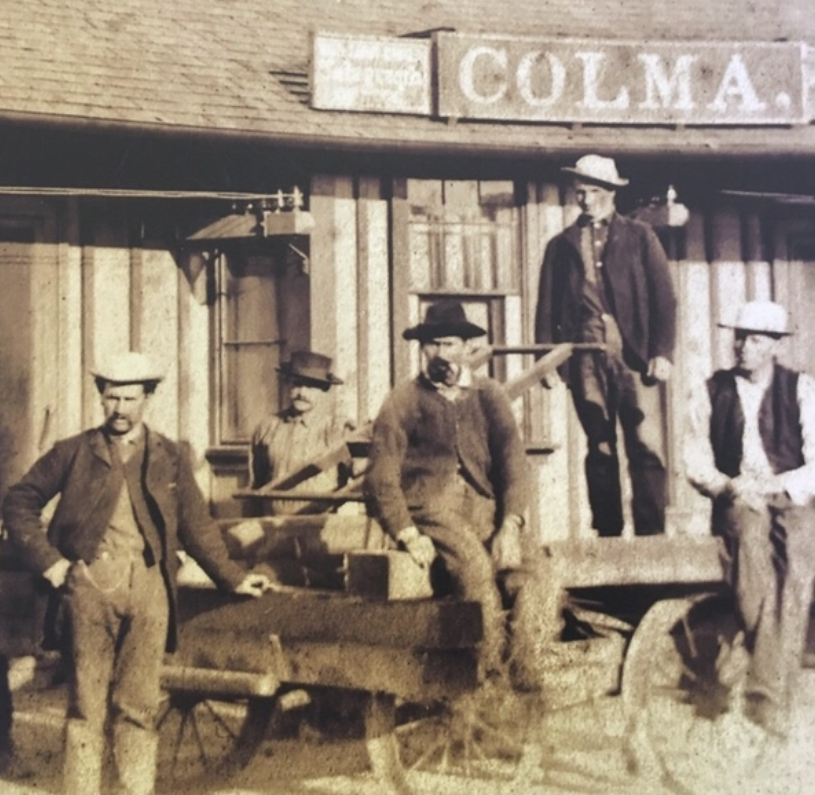
The origin of the community dates to the 19th century as a collection of homes, businesses and churches along El Camino Real and the San Francisco and San Jose railroad line.

In the early 20th century, Colma was also the site of several major boxing events, including a heavyweight title fight for Jack Johnson.
Cemeteries started appearing after San Francisco outlawed new internments in 1900. In 1912, San Francisco evicted all existing cemeteries. The evictions created a massive problem for both communities. Bodies were placed in street cars and transported to Colma. This resulted in many mortuaries and funeral homes being set up.
Approximately 150,000 bodies were relocated out of San Francisco via this method.
The rail line was rerouted in 1907 to a location closer to San Francisco Bay. The original rail line was explicitly redesigned for transporting coffins to Colma. Decades later, said BART purchased a rail line for use in the San Francisco International Airport’s extension project.
For various reasons, the relocation effort was delayed until the end of World War ll.
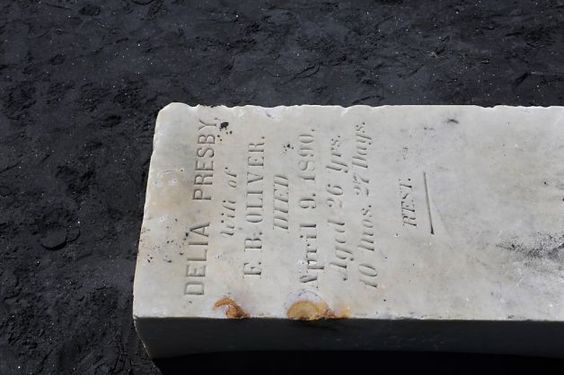
San Francisco Public Works recycled many pauper grave markers near the ocean. In 2012, some of those markers became visible along Ocean Beach. Most came from Laurel Hill Cemetery, and some remain visible to this day.
A little-known fact is Colma had another name. Residents and business owners felt stigmatized by the town being associated with graves. Thus, the name “Lawndale” was incorporated in 1924. However, since that name already existed as a town in Southern California, the name of Colma returned forever in 1941.
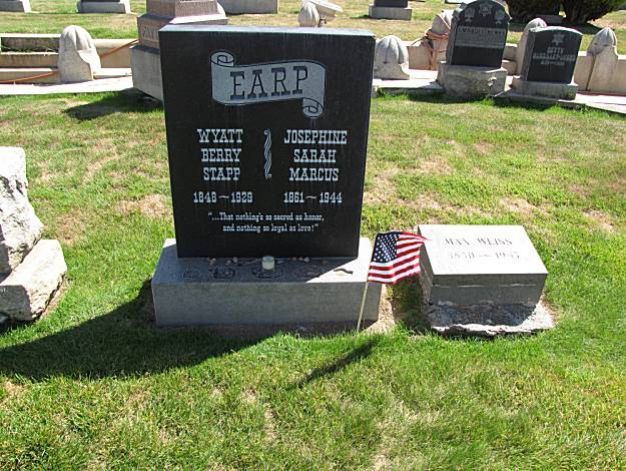
Notables interned there include: Levi Strauss, William Henry Crocker, William Randolph Hearst, Willie McCovey, Wyatt Earp, Benny Bufano, Joe DiMaggio, Emperor Norton, Bill Graham (Wulf Wolodia Grajonca), and numerous others.
Today, Colma’s population is roughly 1,500 living and breathing. The remaining 99% are not…..
Everything else is just history
Some of the photos used in this blog are courtesy of the Local History Room, Redwood City's best-kept secret. The Local History Collection covers all aspects of Redwood City's development, from the 1850s to the present day, with particular emphasis on businesses, public schools, civic organizations, city agencies, and early family histories. The Local History Room is not affiliated with the Redwood City Public Library, but it is inside it.